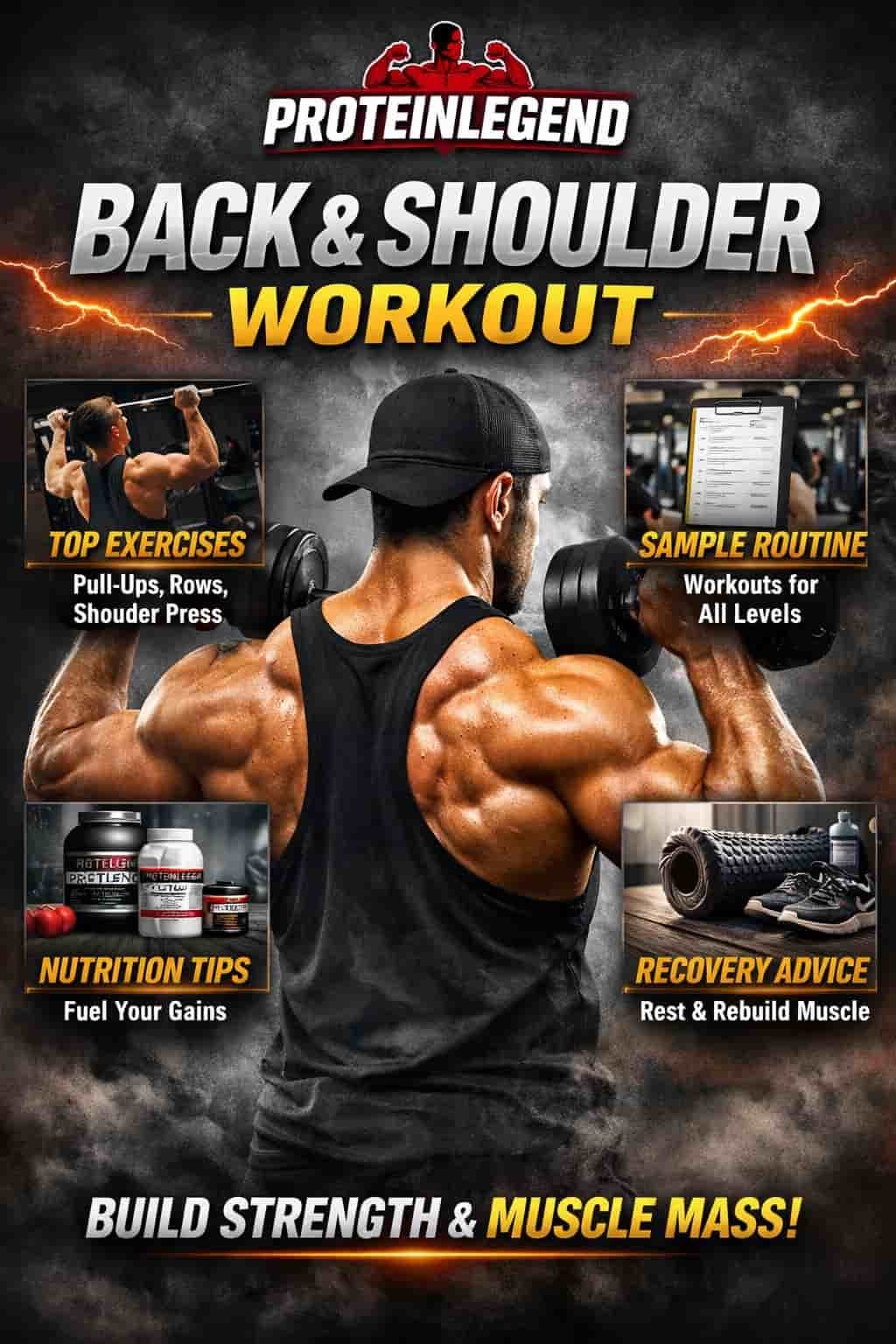
Back and Shoulder Workout: The Ultimate Strength & Muscle-Building Guide
Building a strong, wide, and muscular upper body requires more than just lifting heavy weights randomly. A well-structured Back and Shoulder Workout plays a crucial role in developing posture, strength, symmetry, and athletic performance. For fitness enthusiasts, athletes, and beginners alike, combining back and shoulder training into one powerful workout session can deliver exceptional results when done correctly.
At ProteinLegend, we believe that training smart, fueling your body properly, and following science-backed routines is the key to long-term fitness success. This comprehensive guide will walk you through everything you need to know about an effective back and shoulder workout—from muscle anatomy and exercise selection to training volume, recovery, and nutrition.
Back and Shoulder Workout: Understanding Muscle Anatomy and Function
Before diving into exercises, it’s important to understand the muscles involved in a Back and Shoulder Workout. Knowing how these muscles work helps you train them more efficiently and reduce the risk of injury.
Back Muscles Explained
The back is made up of several large and small muscle groups that work together to support movement and posture:
-
Latissimus Dorsi (Lats): Responsible for width and the classic V-taper look.
-
Trapezius (Traps): Supports shoulder movement and neck stability.
-
Rhomboids: Help retract the shoulder blades.
-
Erector Spinae: Stabilize the spine and support lifting movements.
Shoulder Muscles Explained
The shoulders (deltoids) consist of three heads:
-
Anterior Deltoid: Front shoulder, active in pushing movements.
-
Lateral Deltoid: Side shoulder, responsible for width.
-
Posterior Deltoid: Rear shoulder, essential for posture and balance.
Training back and shoulders together ensures balanced development, better posture, and improved strength for compound lifts like deadlifts, pull-ups, and overhead presses.
Back and Shoulder Workout: Benefits of Training Them Together
Pairing back and shoulders in one session is a smart and efficient strategy, especially for intermediate and advanced lifters. A well-designed Back and Shoulder Workout offers multiple benefits.
Improved Upper Body Strength
Back exercises support shoulder stability, while shoulder exercises enhance pulling power. This synergy allows you to lift heavier weights safely over time.
Better Posture and Injury Prevention
Modern lifestyles involve prolonged sitting and screen time, leading to rounded shoulders and weak backs. Training both muscle groups helps correct posture and reduces shoulder pain.
Enhanced Muscle Definition
Back and shoulders are large muscle groups that burn a high number of calories. Training them together increases muscle pump and enhances upper-body aesthetics.
Time Efficiency
For busy gym-goers, combining back and shoulders saves time while delivering a complete upper-body workout.
Back and Shoulder Workout: Best Exercises for Maximum Growth
An effective Back and Shoulder Workout should include a mix of compound and isolation exercises. Compound movements build mass and strength, while isolation exercises improve shape and muscle balance.
Best Back Exercises
-
Pull-Ups / Lat Pulldowns: Essential for building width
-
Barbell Rows: Build thickness and strength
-
Seated Cable Rows: Improve mid-back engagement
-
Deadlifts: Strengthen the entire posterior chain
-
Face Pulls: Improve rear delts and upper-back health
Best Shoulder Exercises
-
Overhead Barbell Press: Mass builder for shoulders
-
Dumbbell Shoulder Press: Improves stability and balance
-
Lateral Raises: Key for shoulder width
-
Rear Delt Flyes: Crucial for posture
-
Arnold Press: Full deltoid activation
Using controlled movements, proper form, and progressive overload is essential for consistent results.
Back and Shoulder Workout: Sample Training Routine for All Levels
Below is a structured Back and Shoulder Workout routine suitable for beginners, intermediates, and advanced lifters. Adjust weights according to your fitness level.
Beginner Back and Shoulder Workout
-
Lat Pulldown – 3 sets × 12 reps
-
Seated Cable Row – 3 sets × 12 reps
-
Dumbbell Shoulder Press – 3 sets × 10 reps
-
Lateral Raises – 3 sets × 15 reps
-
Face Pulls – 3 sets × 15 reps
Intermediate Back and Shoulder Workout
-
Pull-Ups – 4 sets × max reps
-
Barbell Rows – 4 sets × 8–10 reps
-
Overhead Barbell Press – 4 sets × 8 reps
-
Dumbbell Lateral Raises – 4 sets × 12 reps
-
Rear Delt Flyes – 3 sets × 15 reps
Advanced Back and Shoulder Workout
-
Deadlifts – 5 sets × 5 reps
-
Weighted Pull-Ups – 4 sets × 6–8 reps
-
Barbell Shoulder Press – 5 sets × 5 reps
-
Cable Lateral Raises – 4 sets × 12 reps
-
Face Pulls (slow tempo) – 4 sets × 15 reps
Rest 60–90 seconds between sets for hypertrophy and 2–3 minutes for heavy compound lifts.
Nutrition & Supplement Support by ProteinLegend
Training hard is only half the equation. To maximize the results of your Back and Shoulder Workout, proper nutrition and supplementation are essential.
Protein Intake
Protein supports muscle repair and growth. Aim for 1.6–2.2 grams of protein per kg of body weight. High-quality protein supplements from ProteinLegend help meet daily requirements conveniently.
Pre-Workout Nutrition
Carbohydrates fuel your workout, while caffeine and amino acids improve focus and performance.
Post-Workout Recovery
A fast-digesting protein shake combined with carbs helps replenish glycogen and speed up muscle recovery.
Hydration & Micronutrients
Electrolytes, vitamins, and minerals play a vital role in muscle contraction and endurance.
Recovery Tips for Back and Shoulder Training
Recovery is where growth actually happens. Without proper rest, even the best Back and Shoulder Workout will fail to deliver results.
-
Get 7–9 hours of sleep daily
-
Stretch shoulders and lats post-workout
-
Use foam rolling to release tight muscles
-
Train back and shoulders 1–2 times per week
-
Avoid overtraining by managing volume
Consistency combined with recovery leads to sustainable muscle growth.
Common Mistakes to Avoid
-
Using excessive weight with poor form
-
Ignoring rear delts and upper back
-
Skipping warm-ups
-
Training shoulders too frequently
-
Neglecting nutrition and hydration
Correcting these mistakes can dramatically improve performance and results.
Final Thoughts: Build a Powerful Upper Body with ProteinLegend
A well-planned Back and Shoulder Workout is essential for building strength, size, and a balanced physique. When combined with proper nutrition, smart supplementation, and consistent training, the results can be transformative.
At ProteinLegend, we support your fitness journey with premium-quality supplements designed to fuel performance, enhance recovery, and promote muscle growth. Stay consistent, train smart, and let your back and shoulders define your strength.