

Best Dumbbell Shoulder Exercises
Strong and well-developed shoulders are the foundation of an athletic and balanced upper body. The shoulder muscles not only improve physical appearance but also play a critical role in daily movements, posture, and injury prevention. Whether you lift weights at the gym, work out at home, or follow a fitness routine for overall health, shoulder workouts should never be overlooked.
If you’re looking to build a strong, well-balanced physique, then a broad, powerful set of shoulders are a must. But building a decent set of shoulders isn’t just for show: the deltoid muscles play a huge role in all pressing movements, with the shoulder joint itself involved in nearly every upper-body movement in some capacity. But if you’re trying to build boulder shoulders on a budget – or need some go-tos for those days when all of the swanky delt-building machines are occupied – we’ve got 10 of the best shoulder-building moves that only require dumbbells.

Do You Know: whey protein powder Amazon Check it…
Why Use Dumbbells To Train The Shoulders?
Aside from the fact that dumbbells are a guaranteed commodity in even the sparsest of gyms, or that a pair of bells are most people’s weapon of choice when building out a minimalist home gym set-up, dumbbells have several benefits over other pieces of kit, especially when it comes to working the shoulders.
Greater range of motion
Many dumbbell movements offer you much more freedom in your range of motion versus barbells and machines. A greater range of motion can help to build mobility and more muscle. Numerous studies support using a full range of motion over a shorter range of motion in your exercises for enhanced muscle growth.
At ProteinLegend, we focus on smart training combined with proper nutrition. This detailed guide on the best dumbbell shoulder exercises is designed to help beginners, intermediate lifters, women, and athletes build strength, size, and shoulder stability safely and effectively.
Unilateral work
The ability to work one side of your body at a time can help you to build a balanced physique, addressing any disparities and helping you to mitigate and work around injuries. Evidence published in Medicine & Science in Sport & Exercise mentions that an advantage of unilateral training is that it can provide immediate and constant feedback regarding limb symmetry, a significant factor in the management of injuries.
Understanding Shoulder Anatomy for Better Results
The shoulder is made up of three main heads of the deltoid muscle: the anterior (front), lateral (side), and posterior (rear). Each head plays a different role in movement and stability. A complete shoulder workout targets all three heads to create balanced development and reduce the risk of pain or injury.
Dumbbells are especially effective because they allow natural movement patterns and improve muscle coordination. When combined with machines, cables, and bodyweight movements, they create a complete shoulder training system.
Shoulder Workouts with Dumbbells
Shoulder workouts with dumbbells are among the most effective ways to build shoulder strength and symmetry. Dumbbells allow independent movement of each arm, correcting muscle imbalances and improving coordination. Exercises such as dumbbell shoulder press, lateral raises, front raises, and rear delt flyes activate different parts of the shoulder.
Dumbbell shoulder workouts are suitable for beginners and advanced lifters alike because weight can be easily adjusted. These exercises also reduce stress on the joints compared to heavy barbells, making them safer for long-term shoulder health.
Best Dumbbell Shoulder Exercises Explained
The foundation of an effective shoulder workout lies in choosing the right exercises. The best dumbbell shoulder exercises focus on pressing movements for mass, raising movements for shape, and stabilizing movements for joint health.
Exercises like seated dumbbell shoulder press build overall strength, while lateral raises create width and definition. Rear delt flyes improve posture and shoulder balance, while Arnold presses engage all three deltoid heads. When performed with proper form and controlled tempo, these exercises deliver excellent results without unnecessary strain.
Full Shoulder Workout Structure
A full shoulder workout should be balanced, progressive, and well-structured. It typically begins with compound movements that engage multiple muscles and finishes with isolation exercises that target specific areas.
A complete shoulder workout using dumbbells focuses on warm-up sets, progressive overload, and adequate rest. When combined with proper nutrition and recovery, this approach supports muscle growth, endurance, and joint stability.
Shoulder Workouts Gym: How to Train Shoulders Effectively
Shoulder workouts in the gym provide access to a wide variety of equipment, including dumbbells, machines, cables, and benches. The gym environment allows progressive loading, which is essential for muscle growth.
In a gym setting, dumbbell exercises can be combined with shoulder machines and cables to increase time under tension and improve muscle activation. Training shoulders in the gym also allows better control over angles and resistance, which helps in targeting weak points effectively.
Best Dumbbell Shoulder Exercises
1. Standing shoulder press
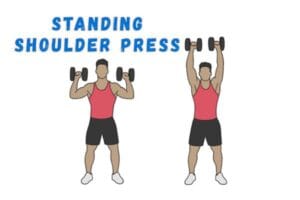
Why: The OG dumbbell shoulder-builder. Stand tall and press them up. Simple, but effective. Performing heavy standing movements also has a downstream effect on the rest of your physique, as you’re forced to stabilise your body and keep yourself braced and upright.
Clean a pair of dumbbells onto your shoulders. Take a breath, squeeze your glutes and create tension throughout your entire body
(A). With no assistance from your legs, press both dumbbells up overhead
(B). Lower them under slow control to your shoulders and repeat. Keep your ribcage locked down and avoid over arching at the lower back.
2. Dumbbell push press with slow eccentric
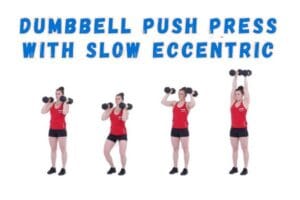
Why: By using a little help from the legs to drive the dumbbells overhead, you’re able to go much heavier. However, by controlling them back down slowly during the eccentric (lowering) portion of the lift, where you’re naturally stronger, you’re able to eke out some more muscle-building bang for your buck.
Clean the dumbbells onto your shoulders, palms facing in. Take a breath and brace your core
(A). Dip at the knees and use your legs to help press your dumbbells overhead
(B). Once locked out overhead, slowly lower the weights back down to your shoulders over a 3-4 second count.
3. Dumbbell Z-press
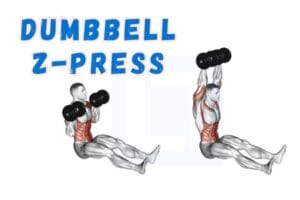
Take a seat on the floor with your legs outstretched, pushing the backs of your knees into the floor, holding a pair of dumbbells on your shoulders
(A). Take a breath and brace your core, keeping your torso upright, and press your dumbbells overhead
(B). Lower under control to your shoulders. Repeat.
4. Upright row
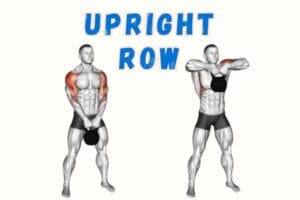
Why: Although some trainers warn of injury risks when performing the barbell upright row, dumbbells allow you a little more freedom of movement to work around and mitigate this. Just pay attention, and keep those weights under control.
Stand tall, holding a pair of dumbbells at your waist, in front of your body
(A). Keeping your trunk tight, pull the dumbbells up towards your chin, driving your elbows up and back
(B). Slowly lower back down to your waist under complete control. Avoid excessive movement in your torso and ‘dropping’ the dumbbells too quickly.
5. High-incline shoulder press
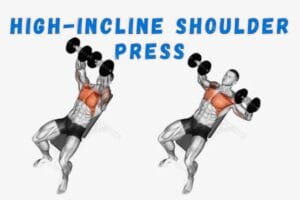
Why: By taking the bench down a notch from 90 degrees, you can put your body into a much more mechanically advantageous position for pressing, and one that also avoids over-stressing the shoulders.
Set a bench to an angle slightly below 90 degrees and take a seat, holding a pair of dumbbells on your shoulders
(A). Take a breath and drive your feet into the ground, keeping your torso as tight to the bench as possible. Press your dumbbells overhead
(B). Lower under control to your shoulders. Repeat.
6. Lateral raise
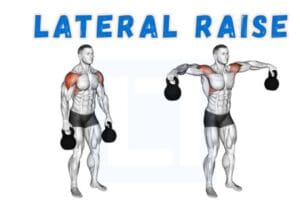
Why: It’s the original shoulder accessory move for building serious delts. But to get the most out of lateral raises avoid turning them into a swinging competition. More control means more muscle.
Take a seat on a bench or stand tall holding a pair of dumbbells at your sides
(A). Avoiding momentum from the hips, raise both arms up, straight, either side of your body until they’re parallel to the ground
(B). Pause here before slowly lowering the dumbbells under control to your sides. Repeat.
7. Front raise
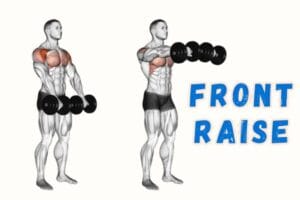
Why: The front delts take a pounding in nearly all of your pressing movements, so you don’t need to overemphasise them. But if you think your front delts might benefit from some more attention, look no further.
Take a seat on a bench holding dumbbells at your sides or kneel or stand holding a pair of dumbbells in front of your body at waist height
(A). Avoiding momentum from the hips, raise both arms up, straight, directly in front of your body until they’re parallel to the ground
(B). Pause here before slowly lowering the dumbbells under control. Repeat. These reps can be performed by alternating arms or working both arms together.
8. Rear delt flys
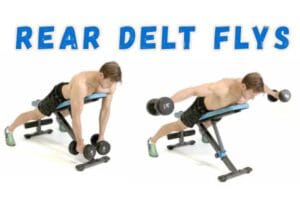
Why: Unlike your front delts, your rear delts don’t get much love, so you should prioritise movements that hit the back of your shoulders – and rear delt flys are one of the best.
Lie prone on a bench, or hinge at the hips until your torso is parallel to the ground, holding a pair of dumbbells, arms at full length
(A). With a slight bend in your arms, raise your dumbbells up away from the ground, finishing in a ‘crucifix’ position
(B). Pause here, squeezing your shoulder blades together before slowly lowering your dumbbells back to their starting position. Repeat.
9. Leaning single-arm lateral raise
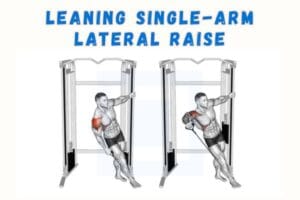
Why: This variation of the lateral raise forces you to keep it strict, while giving you the ability to work the delts from a stretched position. As legendary strength coach Christian Thibaudeu says: ‘The muscle that gets stretched the most, grows the most.’
Hold a dumbbell in one hand at your side
(A). With the other arm, hold onto a rack or something solid for support and lean sideways away from the rack. Avoiding momentum from the hips, raise your dumbbell laterally until parallel to the ground
(B). Pause here before slowly lowering the dumbbell back to your side. Repeat. Perform equal reps on both sides.
10. Single-arm push press
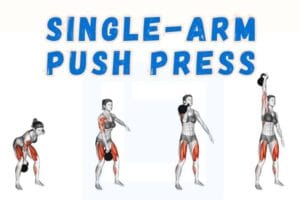
Why: If you really want to go heavy with your dumbbell shoulder work and build some raw power, this is the way. This strongman staple shouldn’t be a mainstay in your shoulder-building regiment, but if used sparingly it can add some serious strength to those delts.
Beginning with your weaker side, clean a single dumbbell onto your shoulder, palm facing in. Take a breath and brace your core
(A). Dip at the knees and use your legs to help
(B) press your dumbbell overhead. Lower under slow control to your shoulder, repeat. Perform prescribed reps on one side, then switch and repeat with the opposite arm.
Shoulder Workout Machine: When and Why to Use It
Shoulder workout machines are excellent tools for controlled and safe shoulder training. Machines guide movement patterns, reducing the risk of improper form. They are especially useful for beginners, people recovering from injury, or those focusing on muscle isolation.
Machine shoulder presses and lateral raise machines maintain constant tension throughout the movement. This helps in improving muscle engagement and minimizing joint stress, making machines a valuable addition to dumbbell-based shoulder workouts.
Shoulder Workouts Cable: Constant Tension for Growth
Shoulder workouts using cables offer a unique advantage: constant resistance. Unlike dumbbells, where tension decreases at certain points of the movement, cables maintain a consistent load throughout the range of motion.
Cable lateral raises, face pulls, and rear delt cable flyes are excellent for shoulder development and injury prevention. Cable workouts also improve shoulder stability and are ideal for refining muscle shape and definition.
Shoulder Workouts at Home: No Gym, No Problem
Shoulder workouts at home are highly effective when done correctly. With just a pair of dumbbells, resistance bands, or even household items, you can build strong shoulders without a gym.
Home shoulder workouts emphasize controlled movements, higher repetitions, and proper form. Exercises like dumbbell presses, lateral raises, and rear delt flyes can easily be performed in a limited space. Consistency and progressive overload are key to seeing results at home.
Shoulder Workouts for Women
Shoulder workouts for women focus on strength, toning, posture, and functional fitness rather than excessive bulk. Well-trained shoulders enhance body shape, improve posture, and support overall upper-body strength.
Women benefit greatly from dumbbell shoulder exercises because they allow controlled resistance and gradual progression. Regular shoulder training also helps in daily activities, reduces injury risk, and improves confidence in strength training.
Shoulder Workouts for Pain and Injury Prevention
Shoulder workouts for pain should prioritize mobility, stability, and controlled movement. Pain often results from muscle imbalances, weak rotator cuffs, or poor posture.
Light dumbbell exercises, rear delt movements, and controlled pressing can help strengthen supporting muscles and reduce discomfort. Exercises focusing on the rear delts and upper back are especially important for shoulder health. It is always recommended to start with lighter weights and focus on form when training for pain relief.
Recovery and Nutrition for Shoulder Growth
Training alone is not enough to build strong shoulders. Recovery and nutrition play a crucial role in muscle growth and joint health. Adequate protein intake supports muscle repair, while healthy fats and micronutrients support joint lubrication and hormone balance.
At ProteinLegend, we emphasize high-quality protein sources, hydration, and proper rest. Combining effective shoulder workouts with smart nutrition accelerates results and prevents overtraining.
Common Mistakes to Avoid in Shoulder Training
Many people make the mistake of lifting too heavy, using poor form, or neglecting rear delt exercises. These mistakes increase the risk of shoulder pain and limit progress.
Controlled movements, proper warm-ups, and balanced training are essential. Shoulders are sensitive joints, and training them intelligently ensures long-term strength and performance.
How Often Should You Train Shoulders?
Shoulders can be trained one to two times per week, depending on workout intensity and recovery. Because shoulders are involved in chest and back workouts, proper rest between sessions is important.
Listening to your body and adjusting volume ensures steady progress without injury.
Conclusion: Build Strong, Healthy Shoulders with Smart Training
The best dumbbell shoulder exercises form the foundation of effective shoulder training. Whether you train at home, in the gym, with machines, or cables, a well-balanced shoulder workout improves strength, posture, and overall fitness.
By combining proper exercise selection, controlled movement, recovery, and nutrition, you can build powerful and pain-free shoulders. At ProteinLegend, our goal is to guide you toward smarter training and sustainable results.