

Moong Dal Protein Per 100g
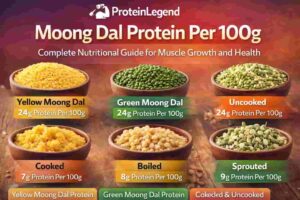
Moong dal is one of the most nutritious plant-based protein sources widely consumed in India and many parts of the world. Whether you are a fitness enthusiast, vegetarian athlete, or someone simply looking to improve daily nutrition, understanding moong dal protein per 100g helps you plan your diet effectively. At ProteinLegend, we believe that whole food protein sources are just as important as supplements when it comes to building muscle, improving recovery, and maintaining overall health. Moong dal provides high-quality plant protein along with fiber, vitamins, minerals, and antioxidants, making it a powerful addition to any balanced diet.
Protein is essential for muscle repair, immune function, enzyme production, and hormone balance. While animal protein sources are often highlighted, plant-based proteins like moong dal offer excellent nutritional value with additional digestive and heart-health benefits. The protein content in moong dal varies depending on whether it is raw, cooked, boiled, sprouted, yellow, or green. Understanding these variations ensures accurate calorie and macronutrient tracking.
 Website Design Company in Ghaziabad webads24
Yellow Moong Dal Protein Per 100g
Yellow moong dal is the split and skinned version of whole green moong beans. It is easier to digest and cooks faster compared to whole green moong. Yellow moong dal protein per 100g in raw form contains approximately 24 grams of protein. This makes it a strong vegetarian protein source suitable for muscle maintenance and growth. In addition to protein, yellow moong dal contains complex carbohydrates, dietary fiber, iron, potassium, magnesium, and B vitamins that support energy metabolism and cardiovascular health.
When cooked, the protein concentration reduces slightly per 100g because water absorption increases weight. However, the total protein content remains nutritionally valuable. Yellow moong dal is ideal for individuals looking for a light, easy-to-digest protein option that supports both muscle building and digestive health.
Green Moong Dal Protein Per 100g
Green moong dal refers to whole mung beans with skin intact. Green moong dal protein per 100g raw is approximately 23 to 24 grams, similar to yellow moong dal. However, green moong dal contains slightly higher fiber content due to the outer skin. This additional fiber supports gut health, blood sugar regulation, and satiety.
Green moong is often used for sprouting because it germinates easily. The intact structure preserves antioxidants and phytonutrients that contribute to overall health. For athletes and fitness enthusiasts, green moong dal provides plant-based protein with slower digestion compared to whey, making it suitable for sustained energy release.
Moong Dal Protein Per 100g Raw
Moong dal protein per 100g raw averages around 24 grams. Raw moong dal also contains approximately 347 calories per 100g, along with around 60 grams of carbohydrates and 1 to 2 grams of fat. This makes it a high-protein, moderate-calorie plant food.
Raw measurements are often used in calorie tracking apps because they provide standardized values before cooking changes water content. For meal planning, understanding moong dal protein per 100g raw helps calculate accurate macro intake.
Moong Dal Protein Per 100g Cooked
Moong dal protein per 100g cooked drops to around 7 to 9 grams depending on cooking method and water absorption. The reduction occurs because cooking increases water weight, diluting protein concentration per 100g. However, the overall protein consumed remains the same if you measure raw before cooking.
Cooked moong dal becomes easier to digest and more bioavailable. Cooking reduces anti-nutrients like phytic acid, improving mineral absorption. This makes cooked moong dal protein per 100g highly suitable for daily meals, especially for individuals with sensitive digestion.
Moong Dal Protein Per 100g Boiled
Boiled moong dal protein per 100g is similar to cooked values, typically ranging from 7 to 8 grams per 100g. Boiling softens the lentils and enhances digestibility. It also slightly increases resistant starch content, which supports gut bacteria.
Boiled moong dal is commonly used in soups, khichdi, and light curries. For those tracking macros, measuring dry weight before boiling provides more accurate protein intake data.
Moong Dal Protein Per 100g Dry
Moong dal protein per 100g dry remains approximately 24 grams. Dry measurement refers to uncooked lentils before soaking or cooking. Dry moong dal also contains around 347 calories per 100g, making it a calorie-dense but nutrient-rich option.
Dry lentils are shelf-stable and convenient for bulk storage. From a fitness perspective, dry moong dal offers a cost-effective plant protein source compared to many commercial protein powders.
Moong Dal Protein Per 100g Uncooked
Uncooked moong dal protein per 100g is essentially the same as dry measurement, around 24 grams of protein. Uncooked refers to lentils that have not undergone any heat processing. These values are important for nutrition labeling and dietary planning.
For individuals calculating daily protein needs based on body weight, knowing uncooked moong dal protein per 100g ensures precise macro counting before meal preparation.
Sprouted Moong Dal Protein Per 100g
Sprouted moong dal protein per 100g typically contains around 8 to 9 grams of protein. Sprouting increases water content, which reduces protein concentration per 100g. However, sprouting enhances vitamin C levels, enzyme activity, and overall digestibility.
Sprouting also reduces anti-nutrients and improves amino acid availability. Many nutritionists recommend sprouted moong for better nutrient absorption and improved gut health. Although protein per 100g decreases due to water weight, bioavailability often improves.
Moong Dal Protein Per 100g Calories
Moong dal protein per 100g calories in raw form is approximately 347 kcal. In cooked form, calories per 100g drop to around 105 to 110 kcal due to water absorption. This makes cooked moong dal a lower-calorie, high-volume food ideal for weight management.
The calorie-to-protein ratio makes moong dal suitable for both muscle gain and fat loss depending on portion control. It provides sustained energy without excessive fat content.
Nutritional Benefits of Moong Dal Protein
Moong dal protein supports muscle repair and growth, especially when combined with other plant proteins to complete the amino acid profile. Although plant proteins may lack certain essential amino acids in isolation, combining moong dal with rice or whole grains creates a complete protein meal.
The high fiber content aids digestion and improves satiety, helping control appetite. Moong dal also supports heart health by reducing LDL cholesterol levels due to its fiber and antioxidant compounds. The presence of magnesium and potassium supports blood pressure regulation.
Moong dal is also beneficial for vegetarians and vegans who need reliable plant protein sources. It is naturally gluten-free and suitable for individuals with gluten intolerance. Its low glycemic index helps maintain stable blood sugar levels.
Moong Dal for Muscle Building
For muscle building, protein intake is crucial. Athletes typically require 1.6 to 2.2 grams of protein per kilogram of body weight. Including moong dal protein per 100g raw as part of daily meals contributes significantly toward meeting this requirement. While whey protein absorbs faster, moong dal offers sustained amino acid release.
Combining moong dal with resistance training supports lean muscle development. It is also ideal for individuals who prefer natural, whole-food protein sources instead of relying solely on supplements.
Moong Dal for Weight Loss
Cooked moong dal protein per 100g provides moderate protein with low calories, making it excellent for calorie-deficit diets. The fiber content promotes fullness and reduces overeating. Its balanced macronutrient profile helps maintain muscle mass while reducing fat.
Moong Dal Nutrition Per 100g (Raw / Dry)
| Nutrient | Amount Per 100g |
|---|---|
| Energy | 347 kcal |
| Protein | 24 g |
| Carbohydrates | 63 g |
| Dietary Fiber | 16 g |
| Sugars | 6 g |
| Total Fat | 1.2 g |
| Saturated Fat | 0.3 g |
| Monounsaturated Fat | 0.2 g |
| Polyunsaturated Fat | 0.4 g |
| Omega-3 Fatty Acids | 0.1 g |
| Omega-6 Fatty Acids | 0.3 g |
| Calcium | 132 mg |
| Iron | 6.7 mg |
| Magnesium | 189 mg |
| Phosphorus | 367 mg |
| Potassium | 1246 mg |
| Sodium | 15 mg |
| Zinc | 2.7 mg |
| Copper | 0.9 mg |
| Manganese | 1.0 mg |
| Folate (Vitamin B9) | 625 mcg |
| Vitamin B1 (Thiamine) | 0.6 mg |
| Vitamin B2 (Riboflavin) | 0.2 mg |
| Vitamin B3 (Niacin) | 2.3 mg |
| Vitamin B5 (Pantothenic Acid) | 1.9 mg |
| Vitamin B6 | 0.4 mg |
| Vitamin C | 4 mg |
Frequently Asked Questions
Q1. What is moong dal protein per 100g raw?
Moong dal protein per 100g raw is approximately 24 grams with around 347 calories.
Q2. How much protein is in cooked moong dal per 100g?
Cooked moong dal contains about 7 to 9 grams of protein per 100g due to water absorption during cooking.
Q3. Is green moong dal protein per 100g different from yellow moong dal?
Both contain similar protein levels around 23 to 24 grams per 100g raw, but green moong has slightly more fiber.
Q4. Does sprouting increase protein content?
Sprouting does not significantly increase total protein but improves digestibility and nutrient absorption.
Q5. How many calories are in moong dal per 100g?
Raw moong dal contains about 347 calories per 100g, while cooked moong dal contains approximately 105 to 110 calories per 100g.
Q6. Is moong dal good for muscle building?
Yes, moong dal provides plant-based protein that supports muscle repair and growth when combined with proper training and balanced diet.
Q7. Is boiled moong dal protein per 100g enough for daily needs?
Boiled moong dal contains around 7 to 8 grams per 100g, so portion size must be adjusted to meet daily protein requirements.
Pingback: Instagram Free Views — How to Increase Views on Instagram Organically in 2026
Pingback: Family Love Quotes – Importance of Family & Emotional Bonding | ProteinLegend
Pingback: Family Love Zone Quotes – Meaning, Status & Emotional Family Bonding | ProteinLegend
Pingback: Self Love Bio for Instagram — Stylish Love Bios to Express Real Feelings on Instagram
Pingback: Status Family Love – Heart Touching Quotes & Hindi Love Status | ProteinLegend
Pingback: username for instagram for girl
Pingback: Instagram Bio for Boys — Stylish, VIP & Modern Bio Ideas for Instagram
Pingback: Family Love Time – Heart Touching Quotes, Songs, Bible Verses & Meaning
Pingback: Family Love Shayari – Emotional Quotes, Hindi Status & Meaning
Pingback: How to Get 100K Views on Reels — Proven Growth Strategy for Instagram Creators
Pingback: Increase Story Views 1000 Free — Real Growth Guide for Instagram 2026
Pingback: Family Love Book – Quotes, Meaning & Blessed Family Messages
Pingback: Family Love Status in Hindi: Emotional, Heart Touching & Meaningful Quotes for Every Occasion
Pingback: Best Increase Story Views 1000 – Complete Guide to Boost Instagram Story Views Organically
Pingback: iHeartRadio: Complete Guide to iHeart, i Heart Radio, Ryan Seacrest & Digital Streaming Experience
Pingback: Instagram Story View – Complete Guide to Increase Instagram Story Views to 1K
Pingback: Happy Family Love: Heart Touching Quotes, Images, and Meaningful Expressions
Pingback: Family Importance – Understanding the Power of Family Love and Relationships