

Protein in 100 Gram Paneer
Paneer or Indian cottage cheese is an indispensable part of vegetarian food in the Indian subcontinent. The fresh and non-melting cheese is processed by curdling milk with natural food acids such as lemon juice or vineiger. The presence of high-quality complete protein and essential minerals such as calcium and phosphorus in paneer makes it an important part of a healthy diet. Moreover, low lactose in paneer also benefits people with lactose intolerance. This is because people with average lactose intolerance are unable to digest high lactose foods.
Paneer, also known as Indian cottage cheese, is one of the most popular and trusted protein sources in Indian diets. Whether you are a gym enthusiast, a vegetarian bodybuilder, or someone simply trying to eat healthy, understanding the protein in 100 gm paneer can help you plan a balanced and muscle-supporting diet. At ProteinLegend, we believe in combining traditional nutrition with modern fitness science to help you achieve sustainable results.
Highly nutritious with a rich content of proteins, lipids, carbohydrates, water, fiber, sugar, etc. in it, paneer has proven benefits for muscles, bones, as well as aiding as a satisfactorily filling food. Therefore, it has a widespread consumption among both vegetarians and those following a fitness or a health-oriented diet. In the following article, we will concentrate on the complete nutritional details of paneer per 100g with a focus on its health advantages. So, let’s start.
What Is Paneer and Why Is It Important?
Paneer is a fresh, non-aged cheese made by curdling milk using natural food acids like lemon juice or vinegar. Unlike many processed cheeses, paneer retains most of the milk’s nutrients, especially protein and calcium. Because it is vegetarian, affordable, and versatile, paneer has become a staple food for fitness lovers across India.
Paneer is especially beneficial for people who do not consume eggs or meat, as it provides a high-quality protein source that supports muscle repair, strength, and recovery.
Paneer vs Whey Protein: Which Is Better?
Both paneer and whey protein have their own advantages. Paneer is a natural, whole food, while whey protein is a concentrated supplement.
Paneer provides sustained protein release, making it perfect for dinner or bedtime meals. Whey protein, on the other hand, is quickly absorbed and ideal for post-workout recovery. For best results, ProteinLegend recommends using both strategically based on your fitness goals.
Protein Content: Paneer Protein Per 100 g
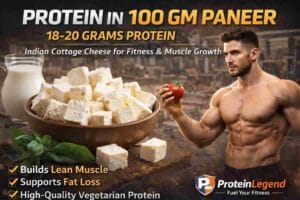
One of the most important things that make the nutrition present in the paneer stand out is the presence of a high amount of proteins. The proteins present in the paneer for every 100g of the material vary from 18-21g. Thus, it can be concluded that this is one of the richest sources of proteins.
What Type of Protein Does Paneer Contain?
The major protein in paneer is casein, a slowly digested complete protein that has all nine essential amino acids. This slowly digested protein ensures a gradual release of amino acids into the bloodstream, thereby promoting muscle repair and growth for a longer period of time.
Nutritional Value of Paneer Per 100 g
The following table shows paneer protein per 100 g:
| Nutrient | Amount per 100 g |
| Calories | 318 kcal |
| Protein | 21 g |
| Total Fat | 24.7 g |
| Saturated Fat | 14 g |
| Carbohydrates | 3.5 g |
| Sugars | 2.8 g |
| Fibre | 0 g |
| Calcium | 710 mg |
| Sodium | 18-916 mg (varies by brand) |
| Cholesterol | 84-89 mg |
Homemade Paneer vs Market Paneer: Protein Comparison
Homemade paneer is often fresher and free from preservatives, while market paneer may contain additives. Nutritionally, both provide similar protein levels, but homemade paneer allows better control over fat content and hygiene.
Benefits of Protein in Paneer for Fitness Lovers
Supports Muscle Growth
The high protein content in 100 gm paneer helps repair muscle fibers damaged during workouts, leading to muscle growth and strength.
Improves Bone Health
Paneer is rich in calcium and phosphorus, which support strong bones and joints, especially important for weight training.
Helps in Fat Loss
Protein increases satiety and boosts metabolism, helping you feel full for longer and reduce unhealthy snacking.
Ideal for Vegetarians
Paneer is one of the best vegetarian protein sources available in India, making it a staple for plant-based fitness diets.
Paneer for Weight Loss: Is It Good?
Many people avoid paneer due to its fat content, but when consumed in moderation, paneer can actually support weight loss. The protein in paneer helps preserve lean muscle mass while dieting and keeps hunger under control.
Low-fat paneer options are also available, offering the same protein benefits with reduced calories.
Essential Nutrients in Paneer
Beyond its high-quality protein, paneer packs in essential nutrients.
- Along with its high-quality proteins, paneer also has necessary nutrients.
- Rich in vital nutrients: A 100g serving of paneer consists of a high amount of 700 mg of calcium, which is important for healthy bones, in addition to phosphorus and magnesium.
- Ease of digestion: Lactose is mostly converted to lactic acid during curdling. This is why paneer is easier to digest compared to regular milk.
- Variety in meals: Although paneer is low in fiber, when it is consumed with vegetables, beans, or brown foods, a healthy combination is formed.
- Complete Protein Source: Serves as a source for complete proteins that promote muscle repairs and growth.
7 Health Benefits of Paneer
- Promotes muscle maintenance and recovery
It is a very good source of full protein, which requires all the essential amino acids necessary for repairing or building muscle. The protein content of high-quality paneer per 100g is used, which helps in the synthesis of muscle protein, thus retaining the muscle mass. It is very helpful for vegetarians, seniors, or physically active people to fulfill their protein requirements without consuming meat or fish.
- Induces satiety and facilitates weight management
The presence of proteins and healthy fats in paneer causes a delay in digestion, thereby causing a person to feel stuffed for a longer time. Adding paneer to meals can prevent people from eating unnecessary snacks and can maintain a healthy weight by controlling calorie intake.
- Improves bone health
Among the benefits of paneer is its richness in calcium. The other minerals that come with calcium are phosphorus as well as magnesium. In 100g, paneer contains 700mg of calcium. Eating foods rich in calcium will promote the strengthening of bones. While consuming calcium-rich diets such paneer is particularly important for women, who face an increased risk of osteoporosis with age.
- Regulates Blood Sugar Levels
The casein protein found in paneer is slowly digested and has a lower GI as opposed to quickly absorbed proteins and carbohydrates. The replacement of high GI foods in meals with paneer is helpful for maintaining blood sugar levels and is effective for diabetics and insulin-resistant patients.
- Provides a lactose-friendly option
Among many other benefits associated with consuming paneer, one such aspect is that the process of making this dairy product results in the removal of lactose present within the milk. Hence, it is clear that the lactose level is lower in paneer compared to milk. In fact, it is more tolerable for people who have lactose intolerance.
- Nutrient density for vegetarians
A vegetarian diet might make it difficult to ingest high-quality protein and minerals. The nutritional benefits of paneer provide both in concentrated quantities. This is why it is so important to have it in your diet. Additionally, it combines well with healthy plant foods.
- Provides Culinary Flexibility
Paneer has a mild taste anddense consistencythatcan be used in a varietyof dishes. It can be grilled, stir-fried, used in curries, added to salads, or even used in sandwiches. All these uses make it very easy to include it in daily meals, and it ensures overall health benefits without compromising on taste.
Who Should Eat Paneer?
Nutrition in paneer is a very useful food, which can be consumed by a large number of people. It is of immense use to vegetarians who intend to boost up their high protein and calcium intake in their dietary needs, which are always difficult to fulfill without having protein-rich foods like meat, fish, etc.
Sportsmen and fitness enthusiasts should not disregard the nutritional aspects of paneer for its quality protein content, which is very helpful for muscle recovery and maintaining muscle mass. Elderly people would benefit from it for maintaining muscle and bone strength through healthy ageing. It is generally tolerated in people who have mild problems with lactose intolerance, given that it has a low amount of lactose in it compared to milk.
However, it is strictly to be avoided in case of a dairy allergy. Just as with any food choice, it is essential that in case of specific health issues or constraints, one seeks qualified advice from doctors or nutritionists before including this in their diet.
Comparing Paneer with Other Protein Sources
The nutritionally enriched paneer protein per 100 gm in comparison to other protein sources suggests paneer’s superiority among protein foods.
| Items | Protein (per 100 g) | Calories (per 100 g) | Benefits |
| Paneer | 21 g | 318 kcal | High calcium; low lactose (good for strength and bone health); casein-rich (slow-digesting protein) |
| Generic Paneer (range) | 18-20 g | 321 kcal | Protein and calorie values vary with fat and moisture content, like full-fat or low-fat paneer |
| Tofu (firm) | 10-12 g | 76 kcal | Plant-based protein; lower in calories; cholesterol-free; and contains isoflavones (good for heart health) |
| Milk (cow milk) | 3.3 g | 61 kcal | Lower protein density; good calcium source; whey + casein protein |
| Greek Yogurt (plain) | 10 g | 59 kcal | Low calories, high in probiotics; and a versatile food |
| Egg (whole and boiled) | 12.6 g | 155 kcal | Rich in essential amino acids, vitamins, and healthy fats; its yolk adds micronutrients. |
Paneer for Women and Men: Is Protein Same?
Yes, the protein in 100 gm paneer remains the same for both men and women. However, portion size and daily intake may vary depending on body weight, activity level, and fitness goals.
Paneer and Digestion: Is It Easy to Digest?
Paneer is generally easy to digest for most people. However, those who are lactose intolerant should consume it in smaller quantities or opt for lactose-free alternatives.
Paneer vs Tofu: Which Has More Protein?
Paneer generally contains more protein than tofu per 100 grams. However, tofu is lower in calories and fat. Both can be included in a balanced diet depending on dietary preferences.
How Much Paneer Should You Eat Per Day?
For an average active individual, consuming 100–200 grams of paneer per day is sufficient to meet protein needs when combined with other protein sources.
How to Include Paneer in Your Diet
- Add in curries/stir-fries: Add cubed paneer to vegetable-filled curries and stir-fried dishes to improve paneer calorie and calcium values.
- Grill/pan-sear: Grill and pan-sear paneer and serve it with whole grains and beans for a nutritious and satisfying meal.
- Improving salads: Pair paneer with vegetables and greens to create a healthy and nutritious salad.
- Switch to saturated carbs: Use paneer in place of a certain portion of the rice, pasta, or bread in wraps, rice bowls, or lunch plates to enhance satiety.
- Test tolerance levels: If lactose intolerant, consume small quantities to assess how well it can be tolerated—paneer has lower levels of lactose than milk.
Paneer in Indian Fitness Diets
Paneer plays a major role in Indian bodybuilding and fitness diets due to its affordability, availability, and high protein content. Many professional trainers recommend paneer as a natural alternative to processed protein supplements.
ProteinLegend’s Take on Paneer Nutrition
At ProteinLegend, we encourage a balanced approach to nutrition. Whole foods like paneer should form the foundation of your diet, while supplements like whey protein can be used to bridge nutritional gaps. Paneer is a powerful, natural protein source that aligns perfectly with a clean and sustainable fitness lifestyle.
Conclusion
The protein in 100 gm paneer makes it one of the best vegetarian protein sources available today. With approximately 18–20 grams of high-quality protein, paneer supports muscle growth, fat loss, and overall health. When included wisely in your daily diet, paneer can significantly improve your fitness results.
For best outcomes, combine paneer with a structured workout plan and trusted supplements from ProteinLegend to fuel your body the right way.